
Guide
Pregnancy week by week
A plain-language tour of the 40 weeks — what develops, which scans happen when, and the milestones worth knowing. Pair it with our due date calculator to see where you are right now.
Conception, implantation and the formation of every major organ system. The most sensitive phase for development — and the phase when folate matters most.
The clock starts
Weeks are counted from the first day of your last period. Conception has not yet happened — your body is preparing to ovulate.
Conception
Fertilisation happens around ovulation. The cells begin dividing as they travel toward the uterus.
Implantation
The embryo implants in the uterine lining. A pregnancy test may turn positive around now.
First heartbeat begins
The neural tube — the future brain and spinal cord — starts forming. Folic acid supplementation protects this critical step.
Heartbeat on scan
The heart starts beating, and early ultrasound may detect it. Morning sickness often begins around this week.
Face takes shape
Facial features, arms and legs begin forming. The embryo is about the size of a raspberry.
From embryo to fetus
All major organs exist in miniature. Fatigue is common as hormone levels peak.
First scan window
The dating scan (8–12 weeks) confirms your due date. The NT scan follows at 11–14 weeks.
First trimester ends
Risk of early loss drops sharply. Many women feel their energy returning.
The "golden trimester" — energy returns, movements begin, and the big anomaly scan happens. This is when the bump becomes visible.
Quickening
Many women feel the first flutters of movement ("quickening") between weeks 16 and 20.
Hearing develops
The fetus can hear sounds. The second-trimester "golden" phase — nausea usually fades and energy rises.
Anomaly scan window
The detailed anomaly scan (18–22 weeks) checks anatomy and organs. Most parents learn the sex now if they choose.
Viability
Around week 24 the fetus is considered viable outside the womb with specialist support. Movements grow stronger.
Responding to sound and light
The fetus blinks, responds to light, and recognises familiar voices. The third trimester is approaching.
Rapid weight gain, lung maturation and positioning for birth. From week 37 the pregnancy is full term.
Third trimester begins
Brain and lungs accelerate. Baby positions head-down in most cases. Iron needs rise as blood volume expands.
Practice breathing
The fetus practises breathing movements. Growth scans may be offered if there are concerns.
Head engaged
The baby usually settles head-down into the pelvis ("engaging"). Your doctor will plan the birth approach.
Full term
From week 37 the pregnancy is considered full term. If birth happens now, outcomes are excellent.
Waiting for the due date
Only about 4–5% of babies arrive exactly on the due date. Most arrive within a week either side — stay in touch with your doctor.
Nutrition that supports the journey
Folate (folic acid or L-methyl folate) is the single most recommended nutrient from before conception through the first trimester — it protects neural-tube development at the moment the tube is forming, often before pregnancy is confirmed.
Vitamin B12 works alongside folate in cell division and nerve health. Combined folate–B12 formulations are a common prescription recommendation in preconception and pregnancy care.
Iron needs rise through the second half of pregnancy as blood volume expands; your doctor will guide whether supplementation is needed. Always confirm any supplement with your gynecologist.
Common questions
Why are pregnancy weeks counted from my last period and not conception?
Tradition and practicality: the last period date is easy to know, while the conception date usually is not. That is why "week 2" of a pregnancy is actually conception time, and the pregnancy is ~40 weeks from LMP but ~38 weeks from conception.
Should I take folic acid before I try to conceive?
Yes. Neural-tube development happens very early — often before a woman knows she is pregnant. Most guidelines recommend starting folate supplementation before conception and continuing through the first trimester, on your doctor's advice.
I'm past my due date. Should I worry?
Overdue pregnancies are common and monitored closely by the care team. Your doctor will schedule additional checks and discuss induction when it becomes appropriate. Do not attempt to self-induce.
When is the most accurate time to date the pregnancy?
The first-trimester dating scan (8–12 weeks) using crown-rump length is the most accurate method. Calculator estimates are a useful planning aid until that scan.
This guide is for general information and is not medical advice, diagnosis, or treatment. Always confirm dates and care with a qualified gynecologist.
For franchise partners
Folate & B-vitamin support formulations
Stocked by partner pharmacies and prescribed in preconception and pregnancy care.
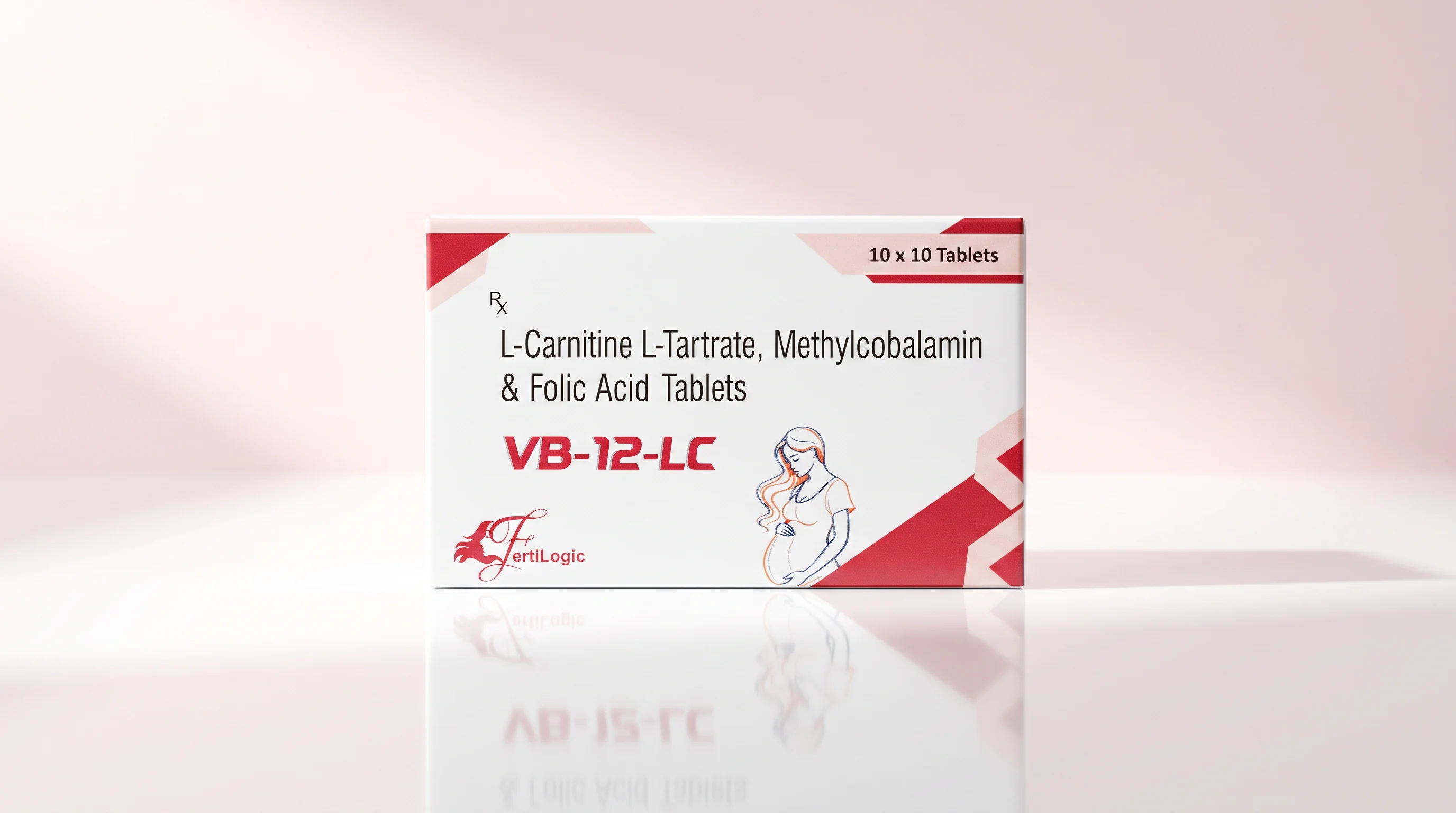
VB-12-LC
L-Carnitine L-Tartrate, Methylcobalamin & Folic Acid Tablets
High-potency Vitamin B12 and L-Carnitine for energy and nerve health.
View detail →
MENOLOGIC
Evening Primrose Oil & Tocotrienol, L-Methyl Folate & Methylcobalamin Soft Gelatin Capsules
Comprehensive support for menopausal transition and symptom management.
View detail →