Free tool
BMI & PCOS Risk Screener
Two quick steps: check your BMI, then screen the common signs associated with PCOS. A gentle first step toward a conversation with your doctor — not a diagnosis.
Your BMI
Step 2 — PCOS risk screening
Answer the six questions honestly. Each "yes" scores one point. This is a screening signal only — PCOS can only be diagnosed by a doctor.
Your screening result
Understanding the two screens
BMI is a screening index, not a diagnosis of health. It is, however, one of the first numbers a gynecologist looks at when a patient presents with irregular cycles or suspected PCOS, because body weight and insulin resistance travel together.
The PCOS screener uses the features doctors ask about most often — cycle regularity, signs of androgen excess (hair growth, acne, scalp thinning), central weight gain, and family history. A higher score doesn't mean you have PCOS; it means these signs are worth raising with a doctor, who can order the blood tests and ultrasound that make the diagnosis.
Common questions
What does my BMI mean?
BMI (body mass index) is weight in kilograms divided by height in metres squared. Below 18.5 is underweight, 18.5–24.9 healthy, 25–29.9 overweight, and 30 or above is considered obese. It is a screening number — it does not measure body fat directly and can mislead for very muscular individuals.
Why does the screener ask about weight and PCOS together?
Insulin resistance and higher body weight are common in PCOS, and excess weight can worsen cycle irregularity and androgen symptoms. The screener combines BMI with PCOS-related signs because prescribers routinely look at both together — but only a doctor can make the diagnosis.
How is PCOS diagnosed?
A doctor uses the Rotterdam criteria: at least two of (1) irregular or absent ovulation, (2) signs of excess androgens, and (3) polycystic ovaries on ultrasound. Blood tests for hormone levels and a clinical examination complete the picture.
Can myo-inositol and metformin help with weight in PCOS?
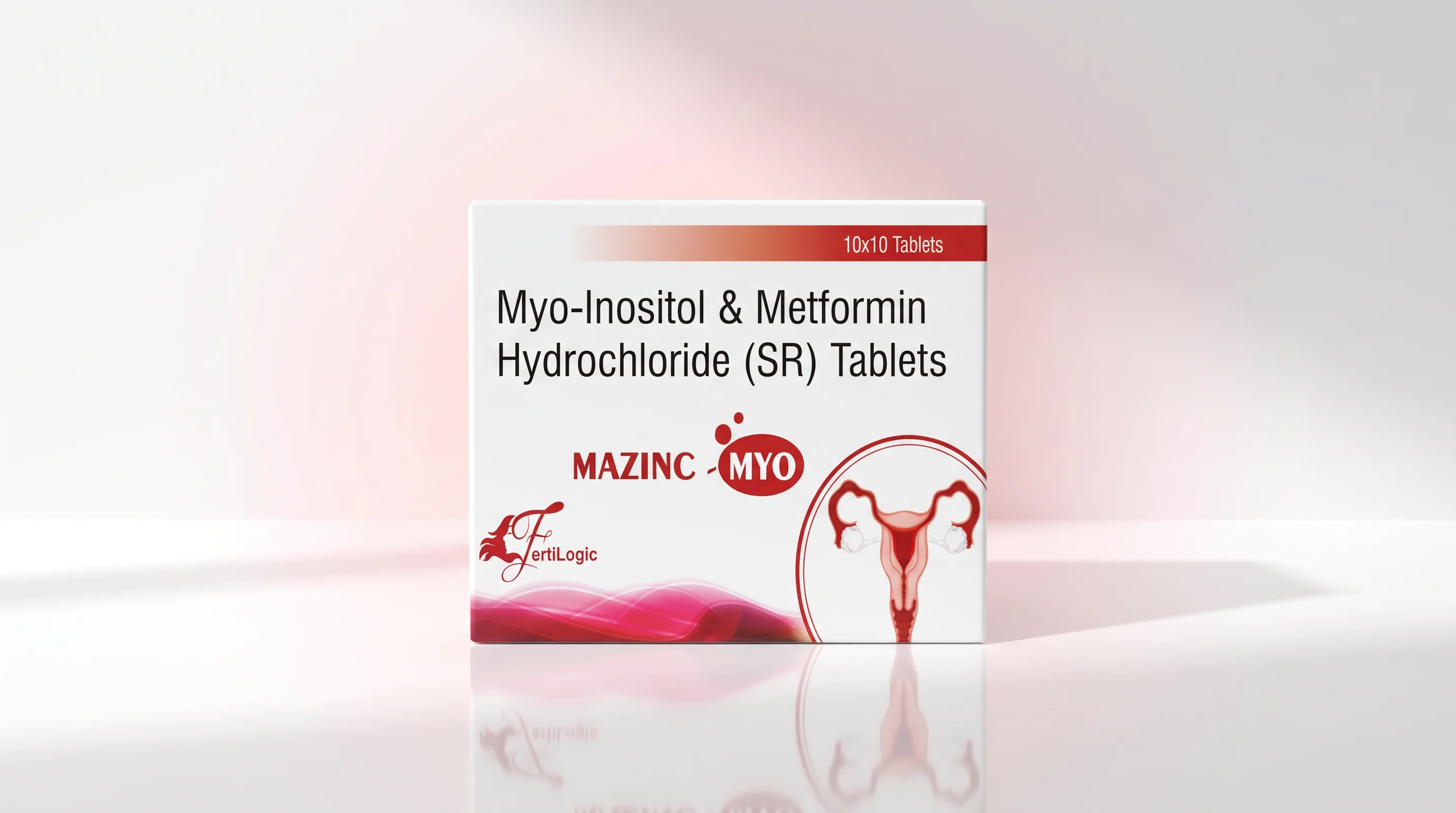
Both are prescribed as part of a PCOS management plan — myo-inositol and sustained-release metformin support metabolic and hormonal balance. They are prescription or physician-supervised products and are not weight-loss drugs. Diet, activity and medical follow-up remain the foundation.
This tool is for general information and is not medical advice, diagnosis, or treatment. Always confirm with a qualified gynecologist.
For franchise partners
A formulation built for this conversation
Myo-inositol and metformin combination for PCOS support — stocked by partner pharmacies and clinics.